Free course › Module 1
Lesson 7 of 10 · 13 min
Start with something small before you build your first Software as a Service (SaaS) product.
Let's shift gears a bit and talk about Software as a Service, often called SaaS. This is software that users typically access online through a subscription model rather than buying it outright with a one-time payment. Building a SaaS product is an exciting step and can be highly profitable, but it introduces additional layers of complexity that you’ll need to thoughtfully navigate. As you start to plan your SaaS product, it's crucial to consider aspects beyond just coding and technical functionality. What is great is that there's a new layer of SaaS that has developed that's one step below a full SaaS product, that's Micro SaaS. Have a look at the table below to understand the differences.
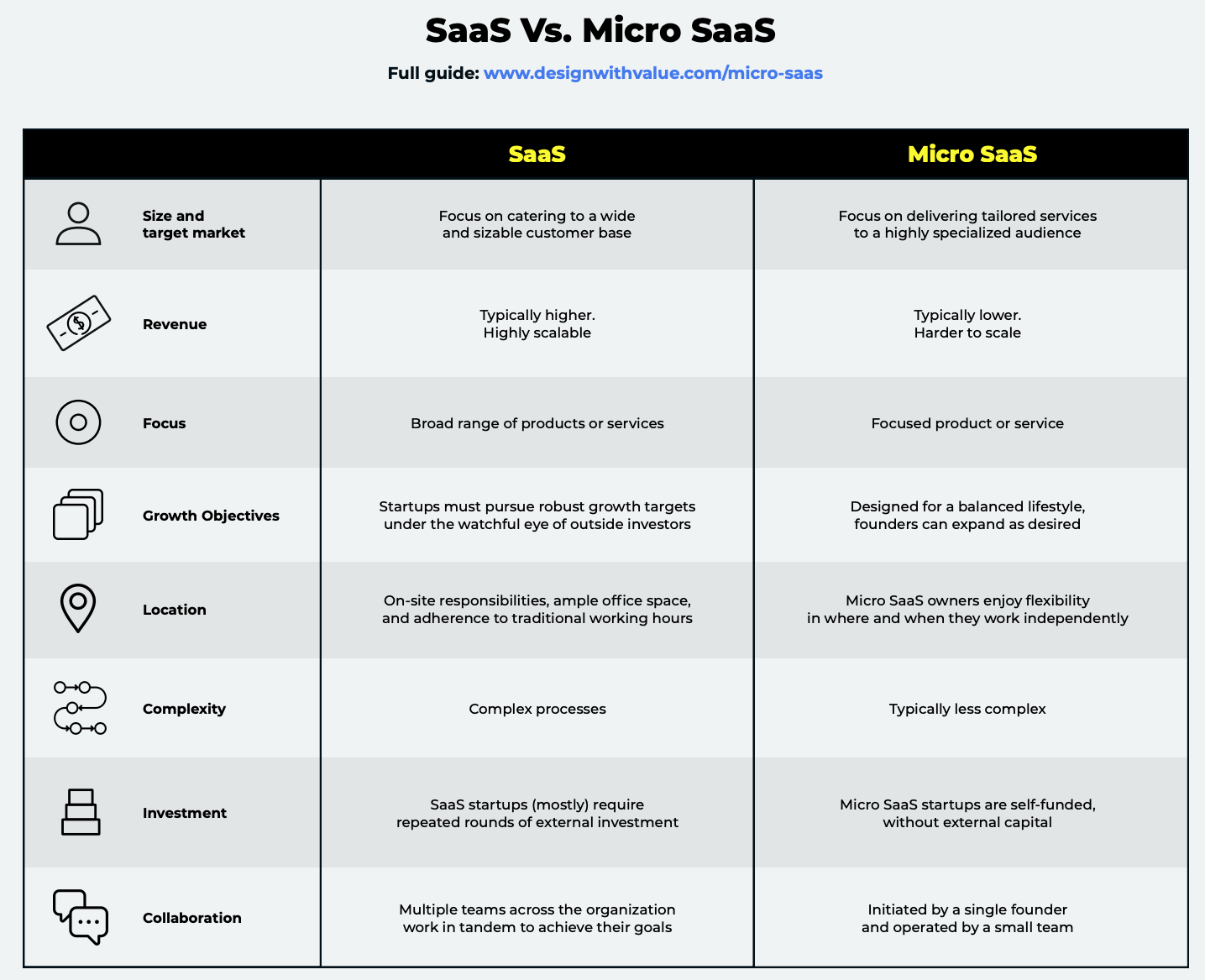
It's quite likely that you will have ideas that fall into the micro saas category for many reasons listed in the table. If you're a one-person business, this will suit you very well and an AI coding tool is one of many tools you'll need. But there are lots of other things you need to keep in mind as you move to the idea of running a business from software alone.
So first, start off with something relatively easy, like an SPA. That's a Single Page Application. Almost everything runs on one page - the landing page. It's got a hero section, pricing, FAQ, contact area, navigation, and a footer. Get used to that as your first project! Then go ahead and deploy to a place like Vercel or Railway. Learn the ropes on something easy rather than something difficult! Then you will have so much more confience to attack a more complicated project the next time around.
Examples of SPAs would be a personal website for an artist, a small business (plumber or home renovation business), a recruitment agentcy, etc.
Here's an example for one I built from start to finish in 2 hours (including the deployment to Vercel). That 2 hours is to a finished product. I charge anywhere from £600-£900 to create a site like that plus monthly hosting fees. They're silmple so you don't have as many security concerns. They don't store any users's data. And they're great for you to build a fake portfolio to show clients if you don't have any! It has the following features:
- mobile and desktop compatibility
- google analytics compatibility
- github integration integrated into Vercel
- responsive design
- serverless architecture
- contact form with custom SMTP server
- built on React with Typescript
- performance optimisation with code splitting and fast load times
These can be built in a day and what's nice about them is they are easy to deploy too! Get something up and then start on something more complex. Trust me you will learn so much from doing the whole process from start to finish with an SPA that it will give you a small taste of what's to come. Then you can up-sell include add-ons with some basic workflow automation. How about a make.com automation that intercepts the contact emails and responds with more questions for patient discovery that gets put into a spreadsheet? That spreadsheet is them summarised daily and sent as a digest?
If you treat it like a proper project, your next "project" being the first phase of your micro SaaS app will seem a bit easier to approach.
The SaaS product is going to be something you sell to others, so it's going to have some key requirements you'll need to think about before you get started. Before the nitty gritty boring stuff though, here's a high-level overview of your approach.
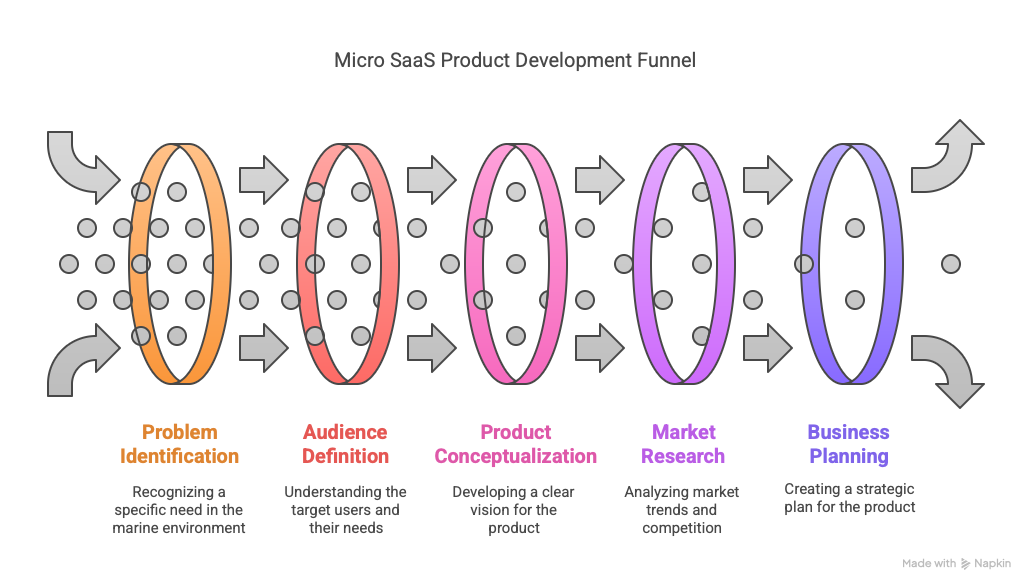
- Ask yourself what problem you're trying to solve?
- Who would be your customers?
- How would the product work?
- Is there any competition/demand?
- What do you need to get to an early prototype?
Those 5 items are the bare minimum to get yourself off the ground. This is where you need to spend the most time hashing this information out.
As you get closer to stage 5, then you can focus on some of the additional items below as part of your overall understanding and preparation. These aren't things that have to be completely ironed out on day one but will need to be considered when you launch.
First, think about the legal side. Unlike simple apps you might create for personal use, SaaS products often handle sensitive user data: names, emails, financial details, and perhaps even more private information. You'll need to consider regulations like GDPR in the European Union, or CCPA in California, which strictly govern data privacy.
Moreover, you need to think about user obligations and the agreements they must accept. Clearly outlining terms of service, acceptable use policies, refund policies, and cancellation terms will protect your business and set clear expectations with your users.
Financial considerations become much more significant when you're running a SaaS business. How will you accept payments? How do you manage subscriptions, handle renewals, or offer upgrades and downgrades? If your business attracts international customers, how will you handle multi-currency payments?
Speaking of finances, taxation is another key factor. Running a SaaS business often means dealing with various tax obligations. Depending on where your customers live, you might need to charge different sales taxes, VAT, or digital services taxes.
Another critical consideration is your licensing model. Traditional software licensing often involves a perpetual license: customers pay once and use the software indefinitely (though perhaps paying separately for upgrades). SaaS products, on the other hand, typically follow a subscription licensing model, where users pay monthly or annually for continuous access.
Platforms like Stripe for payments and Xero for managing your finances will help you massively without the need to hire other people. Of course, the AI assistant will help you implement the Stripe requirements directly into your site (we have a module on this topic later).
Questions to Consider:
- Have you defined a problem you're trying to solve?
- How would that problem be solved with your software?
- What do you need to get it off the ground?